
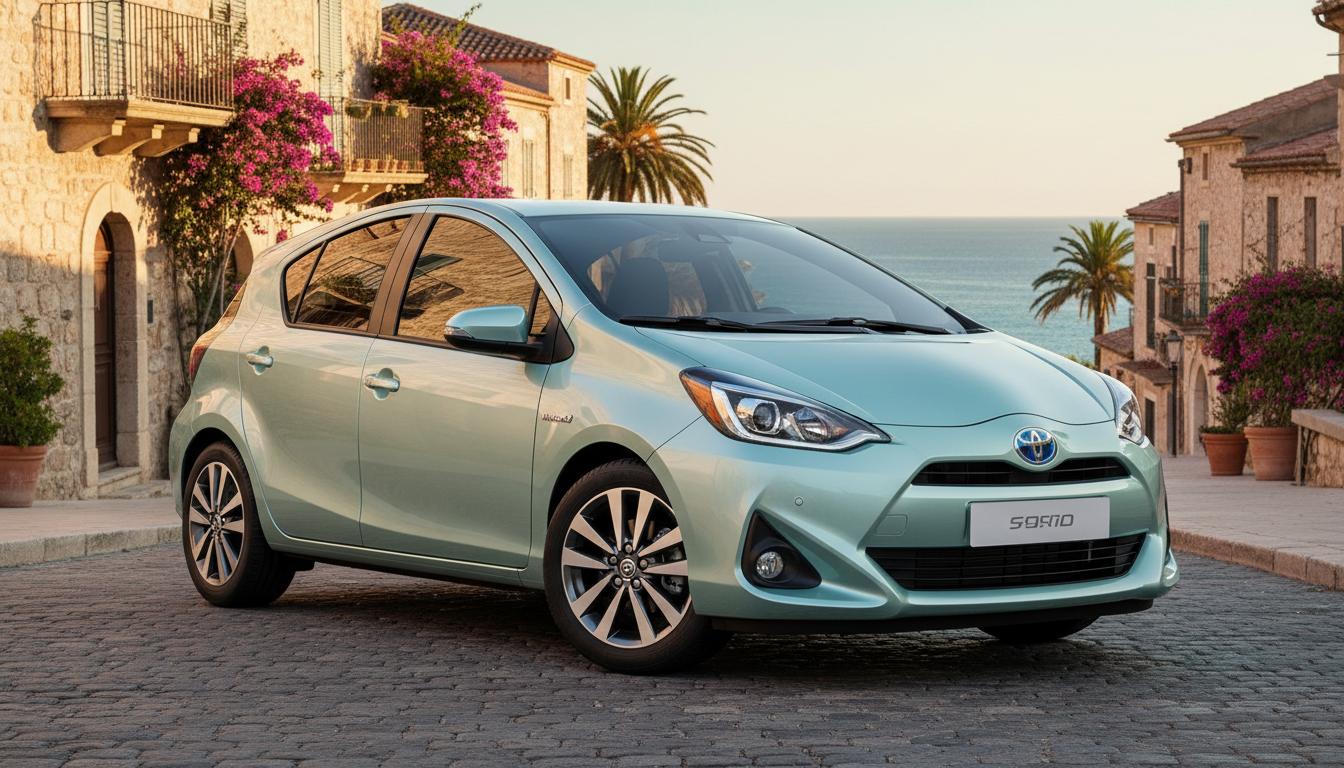
The Toyota Aqua is everywhere in New Zealand for a reason. It’s a compact hybrid hatch that sips fuel, shrugs off city traffic, and keeps running costs low. If you’re weighing up a daily driver that’s easy to park, reliable, and gentle on the wallet, the Toyota Aqua deserves a close look. This guide explains what it is, how the hybrid system works, the different versions you’ll find on the NZ market, what to watch for when buying, and whether it’s the right choice for your needs.
What is
The Toyota Aqua is a small hybrid hatchback sold new in Japan. In New Zealand, most examples are used imports from Japan, while the NZ-new equivalent sold from 2012 to 2018 was branded Toyota Prius c. Same basic car, different nameplate. The Aqua slots below the Prius and Corolla in size, with a tight turning circle and frugal hybrid drivetrain that suits stop–start city driving.
Why it’s popular in NZ:
- Excellent fuel economy in real traffic, not just lab tests
- Proven Toyota hybrid reliability and strong local parts support
- Compact size for city streets and apartment parking
- Plenty of choice as fresh Japanese imports arrive regularly
Key point for buyers: a Toyota Aqua import may differ from an NZ-new Prius c in infotainment, safety features, and trim levels. Always check the specific car’s equipment list rather than assuming.
How it works
The Toyota Aqua uses Toyota’s Hybrid Synergy Drive. It blends a petrol engine with one or more electric motor-generators, a compact battery, and an e-CVT (a planetary gear-based transmission) to move the car smoothly and efficiently.
- Engine: 1.5-litre Atkinson-cycle petrol engine (first generation), later updated to a newer 1.5-litre design in the latest Japanese-market Aqua.
- Electric drive: Motor-generator provides low-speed torque, assists the engine, and captures energy under braking.
- Battery: Nickel-metal hydride (NiMH). It’s self-charging—no plug required.
- e-CVT: A gearset that blends engine and motor power seamlessly; there are no conventional gear changes.
What you feel behind the wheel:
- EV-like creep and quiet take-off at low speeds, especially in traffic
- Engine only wakes up when needed, then shuts off at stops
- Regenerative braking slows the car while topping up the battery
Real-world economy in NZ conditions typically sits in the low to mid 4s (L/100 km) for many first-generation cars when driven sensibly. Later Japanese-market models are often better again. Hills, heavy loads, tyre choice, and short trips will nudge figures up or down.
Types / examples
Two eras matter for New Zealand shoppers:
- First generation (2011–2021, JDM; 2012–2018 NZ-new as Prius c): 1.5-litre hybrid using the 1NZ-FXE engine. Multiple facelifts brought styling tweaks and, in later years, optional driver-assistance features on certain Japanese trims.
- Second generation (from 2021, Japan): new platform, improved efficiency, and a more modern cabin. Most examples in NZ are still fresh imports; availability varies by year and budget.
Common Japanese trim names you’ll see at dealers:
- L: Basic spec; lighter on convenience features
- S: Popular mid-grade with better equipment balance
- G: Higher trim with more comfort features; sometimes key safety tech
- Sporty variants: G’s/GR Sport (firmer suspension, body kit on certain years)
- Crossover (facelift era): slightly raised ride and rugged styling touches
Equipment varies by year/grade. Later Japanese-market cars may include Toyota Safety Sense (pre-collision warning/braking, lane departure alert, etc.), but not all imports have it. Always confirm by VIN and a physical feature check.
| Model | Market name | Typical years seen in NZ | Engine | Hybrid battery | Transmission | Fuel economy (real-world, mixed) | Notes |
|---|---|---|---|---|---|---|---|
| Toyota Aqua (Gen 1) | Aqua (JDM) / Prius c (NZ-new) | 2012–2019 (most common) | 1.5L Atkinson 4-cyl (1NZ-FXE) | NiMH | e-CVT (hybrid) | ~4.0–4.8 L/100 km | Great city car; later years may add driver-assist on some trims |
| Toyota Aqua (Gen 2) | Aqua (JDM) | 2021–present (imports) | 1.5L hybrid (newer design) | NiMH (updated) | e-CVT (hybrid) | Often lower than Gen 1 in practice | More modern cabin and refinement; availability depends on import supply |
| Toyota Prius c (NZ-new) | Prius c | 2012–2018 (NZ-new) | 1.5L Atkinson 4-cyl (1NZ-FXE) | NiMH | e-CVT (hybrid) | ~4.0–4.8 L/100 km | NZ-new service history is a plus; spec differs from JDM Aqua |
Pros and cons
Pros
- Exceptional fuel efficiency for city and suburban use
- Low running costs: tyres, servicing, and consumables are affordable
- Proven Toyota hybrid system with wide NZ support
- Easy to park; tight turning circle
- Resale demand stays strong thanks to reputation
Cons
- Cabin and boot are compact; not ideal for big families or lots of gear
- Road noise at motorway speeds can be higher than larger hatches
- Older imports may lack modern safety tech; check features carefully
- Hybrid battery ages; replacement/reconditioning is a cost to plan for
- Japanese infotainment units may need band expanders or replacement
How to use or choose
How to choose a used Toyota Aqua in NZ (step-by-step)
- Set your budget and fuel target. Include insurance, WOF, rego, and a maintenance buffer.
- Pick the era. First-generation Aquas are plentiful and cheap; second-generation imports cost more but feel newer.
- Shortlist trims and features. Decide if you want Toyota Safety Sense, alloy wheels, reversing camera, smart key, or cruise control.
- Check the import paperwork. Look for auction sheets, odometer verification, and Japanese service stickers where available.
- Run the VIN through NZTA/RightCar. Confirm safety rating, recalls, and specs. Check PPSR for finance owing.
- Scan the hybrid system. Use an OBD2 reader and a reputable app to view battery state-of-health and fault codes.
- Test drive cold. Ensure smooth engine start, no hybrid warning lights, consistent braking feel, and quiet operation.
- Inspect tyres and alignment. Uneven wear can point to suspension or alignment issues.
- Ask for a pre-purchase inspection. Independent mechanics familiar with Toyota hybrids can spot cooling fan issues, leaks, or battery concerns.
- Negotiate with facts. Use service needs (CVT fluid, spark plugs, 12V battery) and tyre condition to discuss price.
Ownership tips for the Toyota Aqua
- Servicing: Follow 10,000–15,000 km intervals (or yearly). Use the correct oil grade for hybrids.
- Hybrid battery care: Keep the rear seat area and battery cooling intake free of dust and pet hair. Good ventilation helps longevity.
- Tyres: Low-rolling-resistance tyres maintain economy; keep pressures set correctly.
- Infotainment: Many JDM head units don’t fully support NZ radio bands or English. Budget for a NZ-market replacement if needed.
- Driving style: Smooth throttle and gentle braking take advantage of regen and EV assist.
Costs and practicalities in NZ
- Fuel: 91 or 95 unleaded as per owner’s manual; the Aqua does not require premium-only fuel.
- Hybrid battery replacement: Costs vary by supplier and pack type; expect from roughly NZ$1,800 to NZ$4,000+ including labour for refurbished or new options.
- Insurance: Generally affordable; premiums depend on driver history and location.
- Road charges: Petrol hybrids pay fuel excise at the pump. There’s no separate RUC for petrol-hybrid Aquas.
- Government rebates: As of 2026, there’s no national rebate scheme for hybrids. Policies can change—check official channels if this affects your budget.
FAQ
Is the Toyota Aqua the same as the Prius c?
Yes. The Toyota Aqua is the Japanese-market name for the car sold new in NZ as the Toyota Prius c. Most Aquas here are used imports, while NZ-new cars carry the Prius c badge.
What fuel economy can I expect in New Zealand?
Many owners see roughly 4.0–4.8 L/100 km in mixed driving for first-generation cars when driven smoothly. Later Japanese-market models can do better. Terrain, tyres, air-con use, and trip length all matter.
Does the Toyota Aqua need to be plugged in?
No. The Toyota Aqua is a self-charging hybrid. It uses the engine and regenerative braking to maintain the battery.
How long does the hybrid battery last?
Battery life depends on age, mileage, heat, and maintenance. It’s common to see well over 8–12 years from the original pack. Reconditioning or replacement is available across NZ when needed.
Can the Toyota Aqua tow a trailer?
Toyota generally does not recommend towing with the Aqua/Prius c. If towing is essential, consider a vehicle rated for it and check NZ regulations and insurer requirements.
What safety features should I look for?
Later Japanese imports may include Toyota Safety Sense features such as pre-collision warning/braking and lane departure alert. Check for multiple airbags, stability control, reversing camera, and ISOFIX. Confirm via VIN and a physical inspection, as equipment varies by trim and year.
Is servicing a Toyota Aqua expensive?
Routine servicing is typically affordable—similar to a small non-hybrid hatch. Use hybrid-appropriate oil and keep up with filters, brake fluid, and coolant. Many NZ workshops are experienced with Toyota hybrids.
What about the e-CVT—does it need special maintenance?
The Aqua’s hybrid e-CVT is durable. Follow Toyota’s guidance; some NZ owners and mechanics choose periodic transaxle fluid changes for longevity. Use the correct fluid type.
Are parts easy to find in NZ?
Yes. Mechanical parts are widely available due to the large Toyota hybrid fleet here. Body and trim pieces are also common through importers and wreckers.
What’s the difference between Aqua trims like L, S, and G?
L is basic, S is mid-spec, and G is higher-spec. Equipment can include keyless entry, alloy wheels, climate control, and safety tech on certain years. Always verify the individual car—trim content varies.
Will a Japanese radio work in NZ?
Not perfectly. JDM head units often miss NZ radio bands and English menus. Many owners fit a NZ-new unit for full radio coverage, Bluetooth, and Apple CarPlay/Android Auto.
How does the Toyota Aqua compare to a Yaris Hybrid?
They’re close in size and mission. Newer Yaris Hybrid models feel more modern and may have broader safety tech, while the Aqua is abundant as a value import. Compare condition, year, and features rather than just the badge.
Bottom line: should you buy a Toyota Aqua?
If your driving is mostly urban or suburban and you prize reliability and low running costs, the Toyota Aqua is one of the smartest small-car buys in NZ. It’s easy on fuel, easy to live with, and supported by a deep bench of local expertise. Focus on a well-maintained example with the features you want, verify the hybrid health, and you’ll have a city car that quietly saves you money every week.