
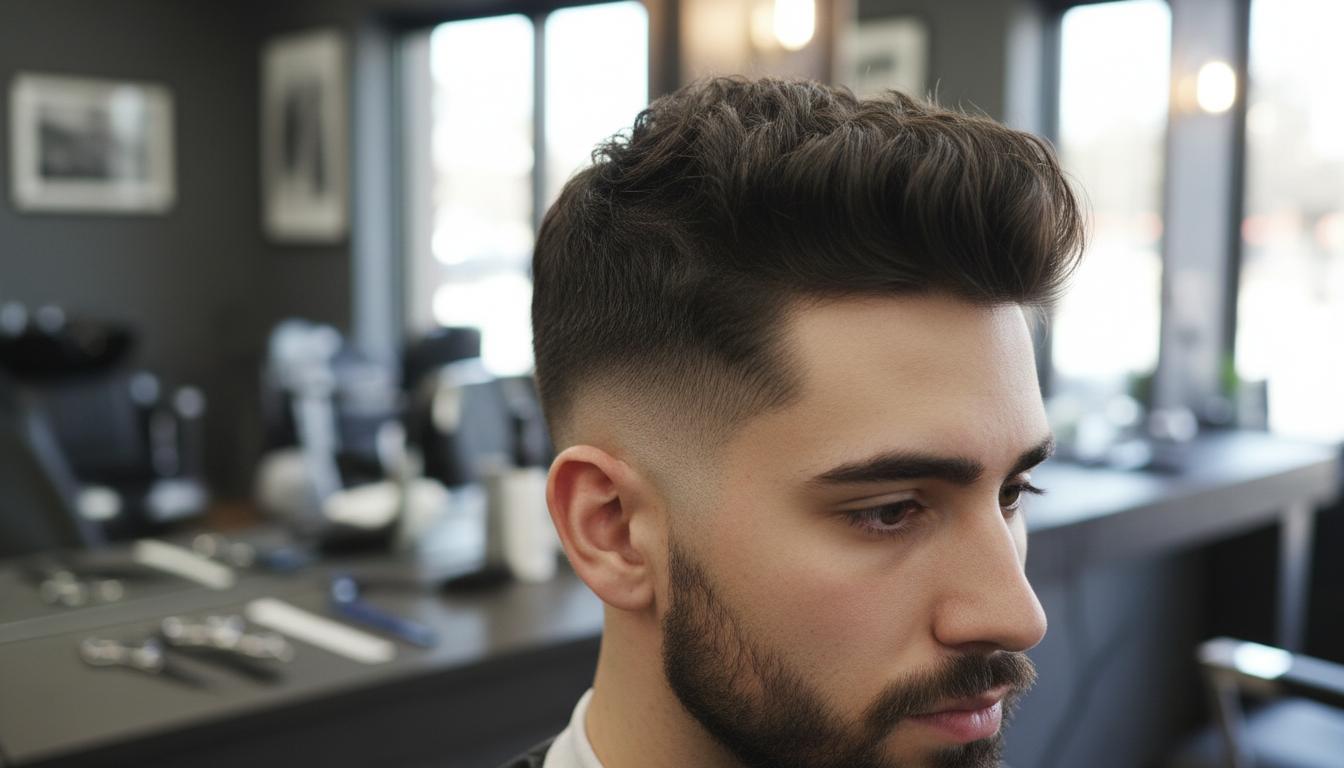
The mid taper is the kind of haircut that looks sharp at brunch, tidy at the office, and still relaxed enough for a Saturday on the coast. It sits between a low and high taper, giving you a neat, blended finish through the sides without stripping away all the length. Here’s how it works, who it suits, and how to ask for it so you leave the chair with exactly what you pictured.
What is
A mid taper is a haircut where the hair gradually shortens from the middle of the head down to the ears and neckline, creating a clean, blended transition while keeping length and shape on top.
Think of it as the “balanced” taper. It starts around the temple or mid-ear area, drops cleanly behind the ear, and narrows at the nape. Unlike a full fade that might take the sides to the skin across a wider area, a mid taper focuses the tightness at the edges (sideburns and neckline) while keeping the mid-sides softly blended.
It works on straight, wavy, curly, and coily hair. It pairs well with crops, quiffs, textured tops, curls, mullets, and longer fringe styles. In New Zealand, it’s a popular pick because it meets most school and workplace standards while still feeling current.
How it works
Barbers build a mid taper in stages, using clippers, guards, and trimmers to create clean transitions and sharp edges.
- Mapping the taper: The “mid” line usually sits at the top of the ear or slightly above the temple, curving around the ear and dropping into the nape.
- Creating a baseline: A barber sets the shortest line at the sideburn and neckline. This can be skin (zero), stubble (0.5), or light shadow (1–2 guard) depending on how bold you want the contrast.
- Blending upward: Using guards (for example 0.5–1–2), the barber blends from short to longer through the mid-sides. The focus is a smooth gradient, not a sudden jump.
- Detailing edges: Trimmers create crisp outlines at the sideburn, around the ear, and along the nape. This is where the haircut looks especially tidy.
- Shaping the top: Scissors or clipper-over-comb maintain your chosen top length and texture, keeping balance with the sides.
Maintenance is simple: a tidy-up every 2–4 weeks keeps the taper sharp. Because New Zealand’s UV is strong, a touch of sunscreen on the exposed neck and ears is smart if you spend time outside after a fresh cut.
Types / examples
The mid taper can be subtle or bold. Here are common ways Kiwis wear it:
Mid taper fade
- Short-to-shortest gradient through the mid-sides, finishing with skin or near-skin at the edges.
- Clean, modern, and great for warm weather.
Mid drop taper
- The taper line “drops” lower behind the ear, following your head shape.
- Flattering for round or wide faces because it keeps some weight near the crown.
Mid taper with curls
- Keeps curls defined on top with a neat perimeter. The sides blend without puffing out.
- Use a curl cream or light gel to keep definition without crunch.
Mid taper mullet
- Length through the back with a clean mid taper at the temples and nape.
- Popular across Aotearoa for a tidy-front, party-back balance.
Mid taper with beard
- The taper flows into a beard fade at the sideburn, avoiding a harsh step.
- Works with stubble or a full beard; keep cheek lines clean.
Mid taper with textured crop or quiff
- Short, choppy crop or airy quiff on top, neat mid taper on the sides.
- Use matte clay for crops; sea-salt spray plus light paste for quiffs.
Mid vs low vs high taper (quick comparison)
| Style | Where it starts | Overall look | Best for | Maintenance |
|---|---|---|---|---|
| Low taper | Just above the ear and very low at the nape | Softer, more conservative | Formal settings, very subtle sides | Every 3–5 weeks |
| Mid taper | Temple to mid-ear, gentle drop behind ear | Balanced, clean, versatile | Most face shapes and hair types | Every 2–4 weeks |
| High taper | Above the temple, higher around head | Sharper contrast, more dramatic | Thicker hair, bold styles | Every 2–3 weeks |
Pros and cons
Pros
- Versatile: pairs with many top styles, from curls to quiffs.
- Work and school friendly: tidy edges without being extreme.
- Face-framing: slims the sides without hollowing the head shape.
- Low product demand: a light matte product often does the job.
- Good in wind and humidity: holds shape better than longer sides on gusty days.
Cons
- Regular touch-ups: needs a clean-up every few weeks to stay sharp.
- Shows growth lines: as it grows out, the gradient softens and can look bulky.
- Requires a steady hand: DIY attempts can leave steps or shadows if you rush.
- Can expose hairline quirks: cowlicks or uneven necklines are more noticeable when cut tight.
How to use or choose
Choosing a mid taper for your hair and face
- Straight or fine hair: ask for a softer shadow (guard 1–2) at the edges to avoid a harsh outline.
- Thick or coarse hair: a tighter edge (0–0.5) with careful blending stops “ballooning.”
- Curly or coily hair: keep more length through the mid-sides so curls stack neatly; detail the hairline for sharpness.
- Round face: a mid drop taper with extra height on top helps elongate the face.
- Long or narrow face: reduce top height; keep a touch more weight at the temples.
- Receding hairline: a mid taper with textured top draws eyes upward and away from corners.
How to ask your barber for a mid taper (step-by-step)
- Say the key phrase: “I’d like a mid taper.”
- Set the edge length: “Keep the edges at a 0.5” (or “skin,” or “guard 1” if you want a softer finish).
- Explain the top: “Leave 3–5 cm on top with texture” (or your preferred length and style).
- Describe the shape: “Let it drop slightly behind the ear, not straight across.”
- Beard or clean-shaven: “Blend the sideburn into my beard” or “Keep a crisp sideburn line.”
- Show a photo: one clear reference shortens the conversation and reduces guesswork.
- Confirm maintenance: ask how often to come back and which product to use at home.
At-home care and styling
- Daily: brush or comb the sides down while damp to set the blend; apply a pea-sized amount of matte paste or cream.
- Weekly: trim stray neck hairs between appointments using a guarded trimmer; keep the line natural.
- Weather-aware: in humid or windy conditions, choose products with light hold (clay, paste, or curl cream) over heavy wax.
- Sun care: NZ sun is strong—dab SPF on exposed neck and ears after fresh cuts.
When to choose a mid taper vs other options
- Choose a mid taper if you want balance: neat edges, not too short through the sides, enough length on top to style.
- Pick a low taper if you prefer maximum subtlety and longer sides.
- Go high taper or high fade if you want sharper contrast and a bolder outline.
FAQ
Is a mid taper the same as a mid fade?
They’re close, but not identical. A mid taper is a gradual reduction focused at the edges (sideburns and nape) with a balanced blend through the mid-sides. A mid fade usually removes more bulk across the sides and can go to skin over a wider area, creating stronger contrast.
How long does a mid taper last before it looks grown out?
Typically 2–4 weeks, depending on your hair growth and how tight the edges are. A skin or 0.5 edge will show growth sooner than a guard 1–2.
Does a mid taper work with curly or coily hair?
Yes. It keeps the perimeter neat while letting curls sit naturally on top. Ask your barber to leave enough length through the mid-sides so the curls don’t puff out. A curl cream or leave-in conditioner helps define without heaviness.
Can I get a mid taper if I have a cowlick or uneven neckline?
Yes, but mention it upfront. Your barber can adjust the drop and outline to minimise attention to tricky areas, and blend in a way that grows out more cleanly.
Is a mid taper acceptable for school or corporate settings in New Zealand?
Usually yes, because it’s tidy and not extreme. Policies vary, so check your school or workplace guidelines if they’re strict about hair length or visible skin fades.
What products suit a mid taper?
- Matte clay or paste: adds texture without shine for straight or wavy hair.
- Curl cream or light gel: defines curls and reduces frizz.
- Sea-salt spray: adds volume and grit before styling paste.
- Beard oil or balm: if you blend into a beard, keep it conditioned.
Should I do a mid taper at home?
You can maintain the neckline and tidy stray hairs, but building a smooth gradient is harder than it looks. For the initial cut and major refreshes, a pro is worth it. If you do try, use guards in small steps and good lighting, and move slowly.
What top styles pair best with a mid taper?
- Textured crop for easy mornings.
- Loose quiff for a bit of height.
- Curls left natural with a defined perimeter.
- Modern mullet with a tidy front and length at the back.
How do I keep my mid taper sharp between cuts?
- Comb the sides daily so the blend sets into place.
- Use a light product to control frizz and flyaways.
- Clean the neckline every 10–14 days with a guarded trimmer.
- Book regular appointments before big events or interviews.
Will a mid taper make my hair look thicker?
It can. Removing excess weight at the edges while keeping structured length on top creates the illusion of more volume where you want it. Texturising the top amplifies this effect.
Key takeaways
- A mid taper offers a clean, balanced look that suits most New Zealand lifestyles.
- It blends from the mid-sides to tidy edges while leaving styling options on top.
- Communicate guard lengths, top length, and drop shape to get the result you want.
- Plan touch-ups every few weeks and protect exposed skin under strong UV.