
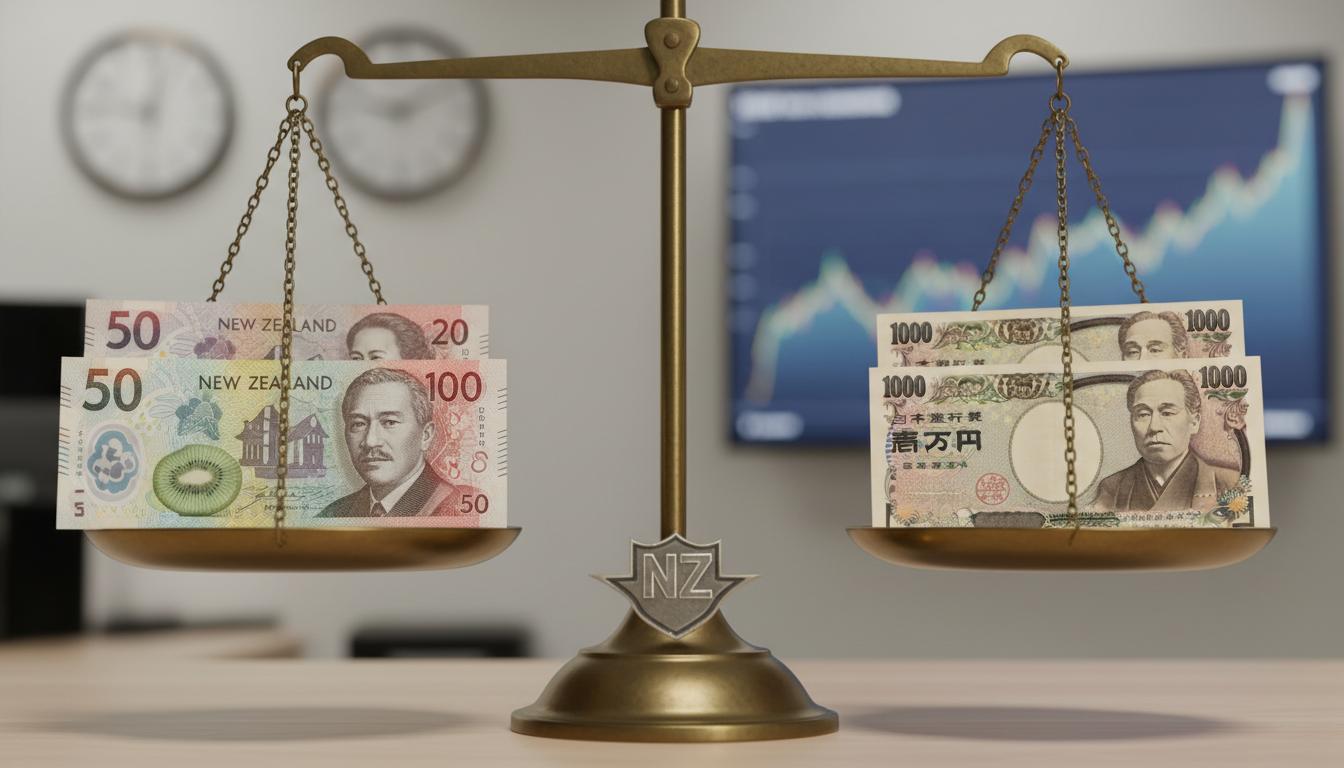
Planning a trip to Japan, paying a supplier in Tokyo, or sending money home from there? This practical guide explains nzd to yen in clear, local terms. You’ll learn what drives the rate, how conversions work, where Kiwis get the best value, and step-by-step actions to convert safely and cheaply.
What is nzd to yen?
nzd to yen means converting New Zealand dollars (NZD) into Japanese yen (JPY). It’s the exchange rate shown when one currency is priced in terms of the other.
- Quick answer: 1 NZD equals X JPY (the value changes constantly).
- Use “nzd to yen” when checking rates online, ordering cash, or booking payments to Japan.
- Retail rates Kiwis see include a spread—the provider’s margin—plus any fees.
How it works
At the simplest level, a currency conversion multiplies the amount in NZD by the exchange rate to get JPY. For example, NZD × exchange rate = JPY.
Two prices matter: the market (interbank) rate and the retail rate you get. Banks and exchange services mark up the market rate to cover costs and profit. That markup is called the spread.
Key factors that move nzd to yen
- Interest rate differences between New Zealand and Japan.
- Economic data: inflation, GDP, trade balance.
- Risk appetite: yen often rises when investors seek safe assets.
- Market hours and news: Asian session liquidity affects yen moves.
How to calculate a conversion (simple)
Step formula: Amount in NZD × quoted retail rate = Amount in JPY.
Example (for illustration only): if a provider quotes 1 NZD = 85 JPY, then 100 NZD × 85 = 8,500 JPY. Always check whether fees are added separately.
Types / examples
There are several common ways for Kiwis to convert nzd to yen. Pick one based on cost, speed, and convenience.
- Banks: Branch or online. Easy but often higher spreads.
- Bureau de change: Cash at airports or city counters. Good for immediate cash but pricey at airports.
- Online currency services: Specialist firms or fintechs offering mid-market rates and low fees.
- ATMs in Japan: Withdraw JPY with your NZ debit card—watch foreign ATM and bank fees plus conversion markup.
- Prepaid travel cards: Lock in a card loaded with JPY before travel; check reload costs.
- International transfers: Use if paying suppliers or sending money to Japanese bank accounts. Options include banks, fintechs, and remittance services.
| Method | Typical rate / spread | Fees | Speed | Best for |
|---|---|---|---|---|
| Major NZ Banks | Higher spread vs market | Flat fee or % for transfers | Same day to 3 business days | Convenience, large transfers |
| Bureau de Change (Airport) | Worst retail rate | Often no separate fee but high spread | Immediate cash | Last-minute cash needs |
| Online FX Providers | Close to market rate | Low fixed or percentage fee | Minutes to 2 business days | Travellers and small to medium transfers |
| ATMs in Japan | Card issuer may use retail rate | ATM fees + card issuer fee | Immediate cash | Pay-as-you-go while travelling |
Pros and cons
Pros
- Access: Easy to get JPY in New Zealand or when you land.
- Choice: Multiple providers let you hunt for good rates.
- Speed: Digital services and ATMs make cash or transfers fast.
Cons
- Costs vary widely—hidden fees and poor rates can add up.
- Volatility: Exchange rates can move quickly, affecting value.
- Airport and tourist-area services often give the worst value.
Method-specific pros and cons
- Banks: Reliable, but often expensive on small transfers.
- Online providers: Usually cheaper, but require setup and ID verification.
- ATMs: Convenient, but card fees and daily limits may bite.
How to use or choose
Choosing how to convert nzd to yen depends on your purpose: travel, one-off transfer, or ongoing business payments. Use the checklist and steps below to decide.
- Decide your priority: lowest cost, speed, or convenience.
- Compare live quotes from at least three providers: bank, online FX, and bureau de change.
- Check total cost: spread + fees + any receiving costs in Japan.
- Read user reviews and confirm limits, ID rules, and transfer times.
- Execute a small test transfer or order a modest amount of cash before committing large sums.
Quick checklist before converting:
- Is a fixed exchange rate needed? Consider a forward contract if paying later.
- Do you need cash on arrival? Pre-order to avoid airport markups.
- Will you use cards? Notify your bank, check foreign transaction fees and ATM charges.
- For business payments, ask about batch payments, multi-currency accounts, and hedging.
Tips for travellers
- Order some JPY from a reputable provider before travel for immediate expenses.
- Avoid exchanging large sums at airports unless necessary.
- Use debit cards at 7-Eleven or Japan Post ATMs—many accept international cards—but check fees.
- Carry a backup card and some cash in case of machine or network issues.
Tips for businesses and regular senders
- Set a hedging strategy if you face regular JPY payments.
- Consider a multi-currency account to receive and hold JPY.
- Use specialist FX providers for better margins and faster transfers.
FAQ
1. What is the best way for a Kiwi to get yen?
For most travellers, ordering JPY online from a bank or specialist and collecting it before travel gives a good balance of price and convenience. For transfers to Japan, online FX providers usually beat banks on cost.
2. Should I convert at the airport?
No—airport bureaus often offer much worse nzd to yen rates. Keep only a small amount for immediate needs and convert the rest earlier.
3. Can I use my NZ debit or credit card in Japan?
Yes. Debit cards work at many ATMs, and credit cards are widely accepted in cities. Expect foreign transaction fees and possibly a poorer conversion rate from your card issuer.
4. When is the best time to convert NZD to JPY?
There is no perfect timing. If you need certainty, fix the rate with a forward contract (for businesses) or convert small amounts over time (dollar-cost averaging). Watch major economic announcements for increased volatility.
5. How do I calculate the final JPY I’ll receive?
Multiply NZD by the provider’s quoted retail rate, then subtract any fees. Example: NZD × rate − flat fee = final JPY. Always check whether the fee is added on top or taken from the converted amount.
6. Are there tax or reporting issues converting NZD to JPY?
Personal travel conversions typically have no tax consequences. For business payments, keep records for accounting and GST purposes. Consult an accountant for large or complex transactions.
7. Can I lock in a rate for future payments?
Yes. Banks and FX providers offer forward contracts and options for businesses and larger transfers. These tools protect you from adverse moves but may have minimum sizes and fees.
Final checklist
- Compare real-time quotes for nzd to yen before you convert.
- Factor in spread, flat fees, and any receiving charges in Japan.
- Avoid airports for large exchanges; use ATMs or trusted online providers instead.
- Test with a small amount, then scale up once you’re comfortable with the provider.
Converting nzd to yen doesn’t need to be costly or confusing. Know your priorities—price, speed, or convenience—compare providers, and use the simple calculation and checklist above to make smarter choices. Safe travels and good value on your next yen conversion.