
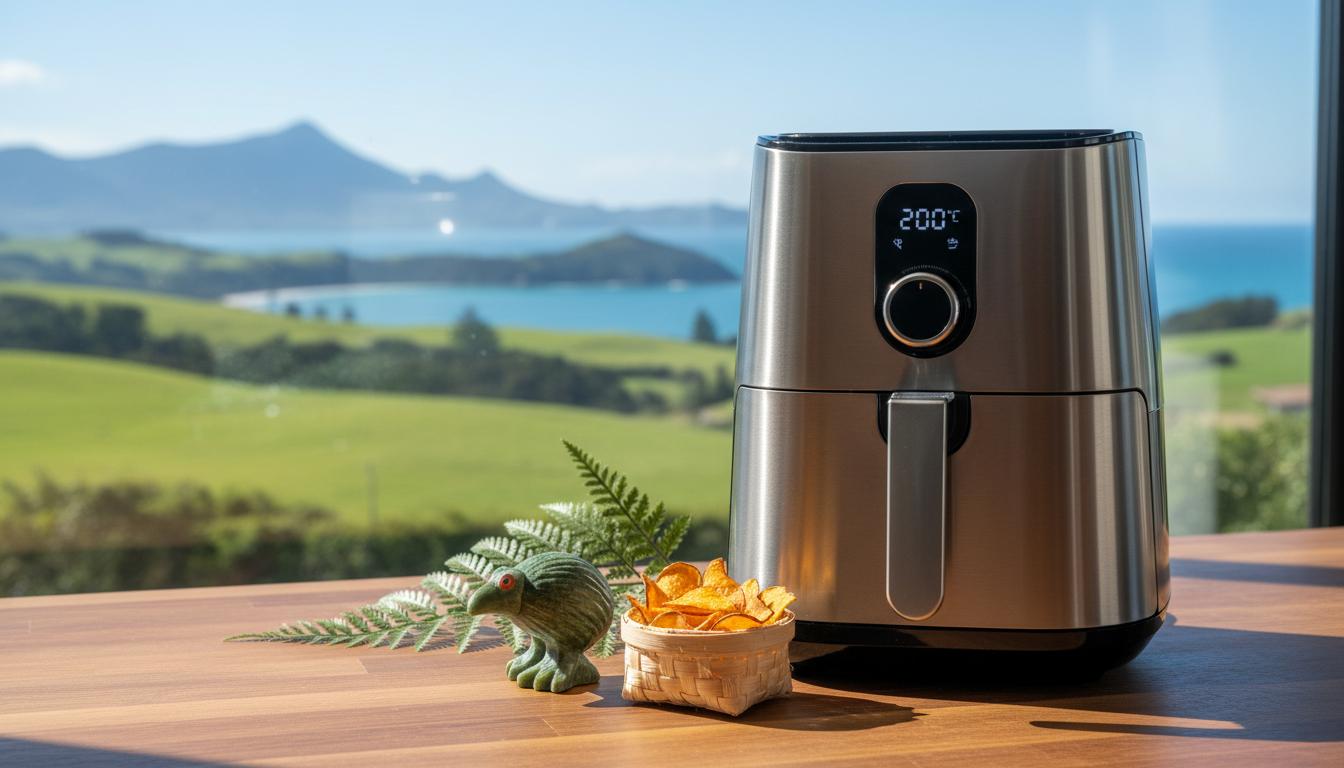
Thinking about an air fryer but not sure which one suits your whānau, budget, and bench space? This straight-talking guide covers everything New Zealanders need to know: what an air fryer is, how it works, the types you’ll see in local stores, real pros and cons, how to pick the right size, and how to get crispy, even results without fuss. You’ll also find a handy comparison table, step-by-step tips, and answers to common questions NZ shoppers ask when searching for an air fryer NZ.
What is
An air fryer is a compact benchtop convection oven that circulates hot air to brown and crisp food quickly, using little to no added oil. Think oven-style results in a fraction of the time, with less energy and mess.
In New Zealand, air fryers run on 230–240V mains power and plug into a standard 10A wall socket. They’re popular because they heat fast, cook weeknight meals without heating the whole kitchen, and reheat leftovers brilliantly.
How it works
Air fryers use a heating element and a powerful fan to blow hot air around the food. This rapid airflow accelerates browning (the Maillard reaction), giving chips, wings, and veg a crisp surface while keeping the inside tender.
- Heating and airflow: A top element and fan blast hot air through a basket or rack so food crisps on all sides.
- Minimal oil: A teaspoon or light spray helps browning, but you don’t need deep-frying volumes.
- Fast preheat: Many models reach temperature in 2–5 minutes.
- Even results: Shaking the basket or flipping halfway improves consistency.
Power and running cost in NZ: most air fryers draw 1400–2000W. At common NZ residential electricity rates (about $0.28–$0.35 per kWh), a 30-minute cook on a 1700W unit costs roughly 24–30 cents. That’s often cheaper and faster than using a full-size oven for small batches.
Types / examples
You’ll find several styles in New Zealand retailers (Noel Leeming, The Warehouse, Briscoes, Farmers, PB Tech, Harvey Norman, Kmart, and online price trackers like PriceSpy). Here are the main types you’ll see while shopping for an air fryer NZ.
- Basket air fryer: The classic drawer-style unit with a perforated basket. Quick heat-up, compact footprint, easy to shake.
- Dual-zone basket: Two drawers with independent controls, handy for cooking chips and chicken at different settings.
- Oven-style air fryer: Front door with racks and trays; some include a rotisserie. Better for pizza, toasties, and multi-shelf cooks.
- Multi-cooker with air fry lid: A pressure cooker that also air fries with a lid attachment—space-saving if you want both functions.
Common brands in NZ include Philips, Ninja, Breville, Instant, Sunbeam, Kmart (Anko), and De’Longhi. Availability and features change often, so compare current listings before buying.
| Type (Examples) | Typical Capacity | Best For | Pros | Cons | Approx. NZ Price* |
|---|---|---|---|---|---|
| Basket (e.g., Philips Essential, Instant Vortex) | 3–7L | Singles, couples, small families | Fast preheat, simple to use, easy to shake | Limited height for larger roasts | $99–$299 |
| Dual-zone basket (e.g., Ninja Dual Zone) | 2 x 3–4L | Families wanting two foods at once | Independent temps/times, sync finish | Wider footprint, higher price | $349–$499 |
| Oven-style (e.g., Breville Smart Oven Air Fryer) | 10–22L (racks) | Pizza, toasties, multiple trays | Versatile, sight window, rotisserie options | Slower preheat, bigger to clean | $249–$599 |
| Multi-cooker + air fry lid (e.g., Instant Pot + lid) | 6–8L bowl | Small kitchens needing one device | Multiple functions, pressure + air fry | Bulkier, airflow can be less intense | $199–$399 |
*Prices are indicative NZD ranges and vary by retailer and sales.
Pros and cons
Pros
- Speed: Quicker preheat and cook times than a full oven.
- Energy efficient for small batches.
- Crispy texture with little oil.
- Great for reheating pies, pizza, and chips—no sogginess.
- Compact: Perfect for apartments, baches, and student flats.
Cons
- Capacity: Big roasts or large family portions may require batches.
- Cleaning: Baskets and racks need regular washing to avoid smoke.
- Noise and smell: The fan hums; fatty foods can smoke if not managed.
- Counter space: Larger or dual-zone models are wide and tall.
How to use or choose
How to choose the right air fryer NZ
- Capacity and household size:
- 3–4L: One or two people, snacks, small sides.
- 5–7L: Families of 3–5; whole chicken in taller baskets.
- Dual-zone: Two foods at once without mixing flavours.
- Oven-style: Multi-tray cooking, toasties, pizza, dehydrating.
- Footprint and clearance: Measure your bench and under-cabinet space. Allow several centimetres around vents for airflow.
- Power and performance: 1500–2000W is common. Higher wattage usually means faster recovery when you open the drawer.
- Controls: Analogue dials are simple; digital presets add precision. Look for preheat and shake reminders.
- Cleaning: Non-stick baskets and dishwasher-safe parts are convenient. Dark coatings hide stains; stainless inserts are durable.
- Accessories: Extra racks, skewers, pizza tray, or a rotisserie broaden what you can cook.
- Noise and odour: Fan noise varies; read NZ user reviews before buying.
- Safety and compliance: Choose models with the AU/NZ plug and RCM compliance. Avoid overseas imports without proper certification.
- Warranty and CGA: Reputable NZ retailers back products under the Consumer Guarantees Act. Keep your receipt.
- Budget: Great value exists under $200; premium features cost more. Watch local sales and air fryer deals NZ-wide.
Step-by-step: Your first cook
- Unbox and wash: Clean the basket, tray, and racks with warm soapy water. Dry well.
- Place safely: Set on a heat-resistant bench with space around the vents. Avoid cramped corners.
- Burn-in cycle: Run empty at 180–200°C for 10 minutes to reduce factory odour. Ventilate the kitchen.
- Preheat if needed: Some models need 2–5 minutes; others start cold. Follow the manual.
- Prep food: Pat dry. Toss with 1–2 teaspoons of oil or a light spray (avoid aerosol propellant sprays that can damage non-stick). Season.
- Load correctly: Don’t overcrowd. Leave gaps so air can circulate.
- Cook and shake: Start 10–20% lower time than the recipe, then shake or flip halfway. Add time in small steps.
- Check doneness: Use a thermometer—chicken 75°C, fish 63°C, reheated leftovers 74°C.
- Rest and serve: Let food rest 2–3 minutes for crispness to set.
- Clean after cooling: Wipe the interior. Wash basket/tray to prevent smoke next time.
Practical cooking tips for Kiwi staples
- Kūmara chips: 200°C, 12–16 minutes. Cut evenly, soak briefly, pat dry, toss with oil and salt, shake twice.
- Fish fillets (hoki, tarakihi, snapper): 180°C, 7–10 minutes depending on thickness. Light crumb or panko for crunch.
- Chicken nibbles: 190°C, 20–25 minutes. Dry well; baking powder in the rub helps crisp skin.
- Sausage rolls or pies (reheat): 160–170°C, 6–10 minutes. Pierce the top to vent steam.
- Pork belly: Start 200–210°C for skin, then reduce to 160–170°C to finish tender.
- Roast veg (pumpkin, carrots, broccoli): 190–200°C, 12–18 minutes, tossed in oil and salt.
Common mistakes to avoid
- Overcrowding: Leads to pale, soggy results. Cook in batches instead.
- Skipping the shake: Move food around halfway for even browning.
- Too much oil: A light coat is enough; excess oil can pool and smoke.
- High-sugar marinades at high temp: Burn easily. Drop the temperature or add glaze near the end.
- Blocking airflow with foil: If using foil, keep it flat and away from the fan. Perforated baking paper is safer.
- Using flimsy extension leads: Plug directly into a wall socket when possible.
FAQ
Is an air fryer worth it for NZ households?
Yes if you cook small to medium batches, want faster dinners, and prefer crispy textures with less oil. It’s especially handy for flats, small families, and anyone who reheats leftovers.
Basket or oven-style—what’s better?
Basket models are faster and simpler; oven-style models are more versatile and handle multi-tray cooking. If you love toasties and pizza, consider oven-style. For weeknight chips and chicken, basket is ideal.
What size air fryer should I buy?
For one or two people, 3–4L works. For three to five people, 5–7L is a sweet spot. Dual-zone suits families wanting two foods at once. Check external dimensions so it fits your bench.
Do I need to preheat?
Not always. Many recipes work from cold, but preheating improves sear and consistency. Follow your manual and consider a 2–3 minute preheat for best browning.
Can I use baking paper or foil?
Yes—use perforated baking paper or weigh down foil so it can’t lift into the fan. Never block the vents. Avoid paper during preheat without food on it.
How do I stop smoke?
Clean the basket and tray after greasy cooks, avoid too much oil, and cook fatty foods at slightly lower temperatures. A slice of bread or a little water under the basket can catch drips in some models.
Is it healthier than deep frying?
It uses much less oil, which lowers fat and kilojoules. Still, results depend on what you cook and how much oil you add.
What oil should I use?
Use high smoke point oils like canola, rice bran, or avocado oil. Avoid aerosol propellant sprays; use a refillable mister instead.
What about warranty in NZ?
Buy from NZ retailers for proper plugs, RCM compliance, and support under the Consumer Guarantees Act. Keep your proof of purchase. If something fails unreasonably early, you may have remedies beyond the standard warranty.
Where can I find the best air fryer NZ deals?
Check weekly sales at Briscoes, Noel Leeming, The Warehouse, Farmers, Harvey Norman, PB Tech, Kmart, and compare on PriceSpy. Holiday sales and clearances are good times to buy a cheap air fryer NZ-wide.
Can I bake in an air fryer?
Yes—small cakes, muffins, and cookies work well. Drop the temperature by about 10–15°C vs a standard oven and check early.
How do I clean it?
Unplug, cool, then wash the basket and tray with warm soapy water. Wipe the interior with a damp cloth. Avoid metal utensils and abrasive pads on non-stick surfaces.
Is a multi-cooker with air fry lid a good idea?
Great if you’re short on space and want pressure cook + air fry in one device. If your main goal is fast, crispy results, a dedicated basket model usually performs better.
Final pointers for New Zealand buyers
- Match the capacity to your regular meal size, not the biggest cook you’ll do once a year.
- Measure your bench and cupboard clearance before you buy.
- Look for solid build, easy-clean parts, and straightforward controls.
- Buy locally for proper compliance, support, and easier returns.
- Use your air fryer for more than chips—try kūmara, roast veg, fish, toasties, and reheating pies.
Whether you’re after a compact model for a flat in Dunedin or a family-sized dual-zone for a busy Auckland kitchen, the right air fryer NZ can speed up dinner, save power, and serve up reliably crispy results—without turning the whole house into an oven.