
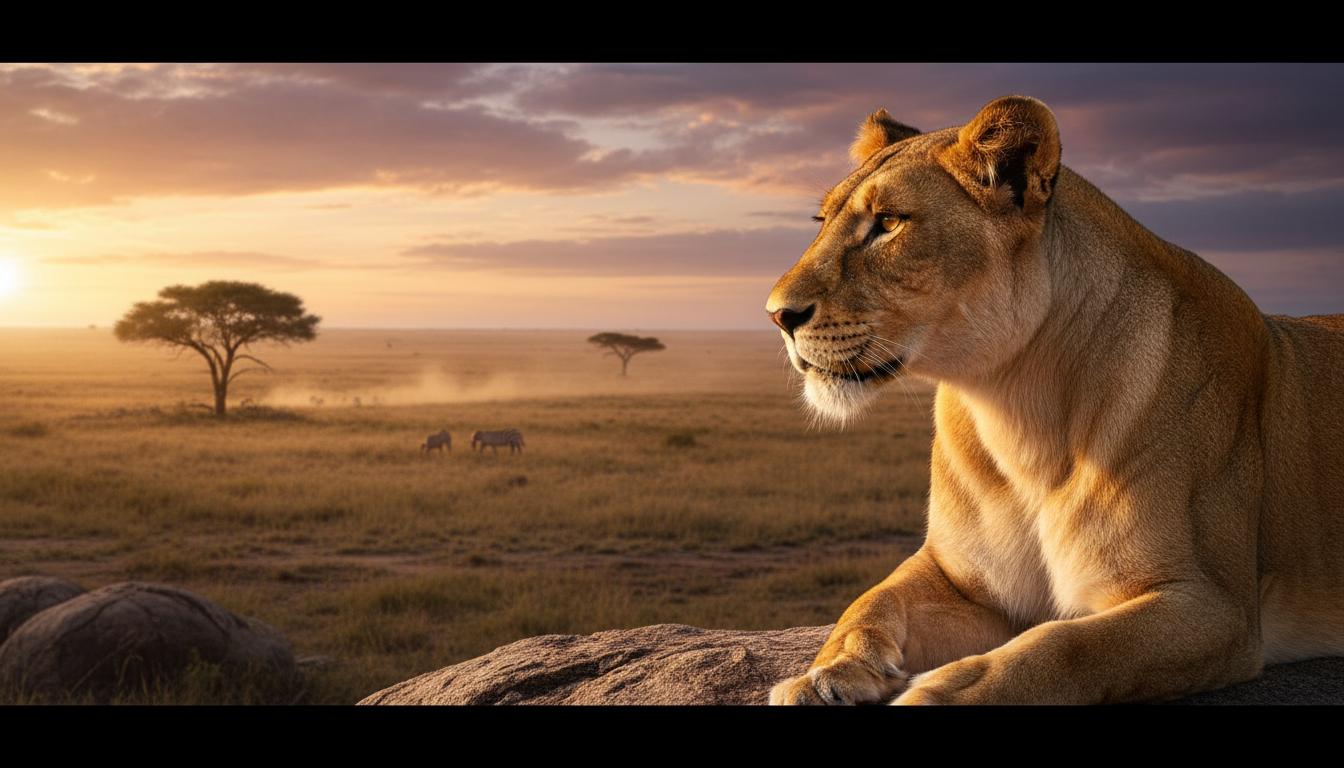
The lioness is the engine of the pride—swift, strategic, and fiercely social. If lions are Africa’s headline act, lionesses write the script: they hunt, raise cubs, and hold the family together. This guide unpacks what a lioness is, how pride life works, the main types and examples you’ll hear about, the trade-offs behind her strategy, and how Kiwis can choose ethical ways to see lionesses up close. A practical FAQ at the end answers common questions in plain English.
What is
A lioness is an adult female lion (Panthera leo). She’s typically smaller and more agile than a male, lacks a full mane, and does most of the pride’s hunting. Lionesses live across parts of sub‑Saharan Africa and, in the case of Asiatic lions, in India’s Gir Forest. There are no wild lions in New Zealand.
Lionesses are central to the pride’s identity. Related females—mothers, daughters, aunts, sisters—form a lifelong unit that shares food, cub care, and territory defence. Males, often brothers or cousins, form coalitions that mate with the pride’s females and help defend against rival males.
Conservation status: Lions, including every lioness, are listed as Vulnerable on the IUCN Red List due to habitat loss, conflict with people, and declines in wild prey. Populations vary by region, with some strongholds and some sharp declines. Responsible tourism and community-led conservation can help.
How it works
Pride structure and roles
A pride is built around related lionesses. Females usually stay in their birth area for life, while males disperse and may take over new prides. Typical pride size ranges from a handful of adults to more than a dozen, depending on prey and habitat. Lionesses coordinate daily movements, choose den sites, and set the rhythm of hunts and rests. Male coalitions patrol borders, deter intruders, and father cubs.
Hunting and food sharing
The lioness is a cooperative hunter. At dusk or dawn, she uses cover—grass, shrubs, termite mounds—to stalk within striking distance. Some lionesses flank to push prey toward an ambush; others wait downwind. On open plains, they sprint in short bursts. In woodlands or floodplains, they rely more on stealth and teamwork.
- Typical prey: wildebeest, zebra, buffalo calves, and various antelope. In some regions, warthogs or even giraffe calves.
- Opportunism: Lionesses scavenge when it’s smart, stealing from hyenas or other predators when the odds favour them.
- Feeding order: Adult males often feed first at a carcass; then lionesses and cubs. Within the females, kin bonds and rank can influence access.
Breeding and cub care
A lioness comes into heat every few weeks outside pregnancy. After a gestation of about 110 days, she gives birth to one to four cubs, commonly two or three. She’ll hide them for several weeks, moving dens to reduce risk from hyenas, leopards, or rival males. Lionesses in the same pride frequently synchronise births and share nursing; an “auntie” will let her nieces and nephews suckle alongside her own cubs. This communal care improves survival when food is patchy or predators are bold.
Male takeovers are dangerous for cubs. Incoming males may kill small cubs to bring females back into heat, a grim reality that also shapes lioness behaviour—defence, concealment, and tight coordination matter.
Communication and coordination
Lionesses keep the pride knitted together with sound, scent, and touch. Roars carry far and help locate pride-mates or warn rivals. Close-up, they use grunts, mews, moans, and purrs. Head-rubbing and licking reinforce bonds. Scent marks and visual signals—tail flicks, ear position, body posture—help coordinate hunts without giving the game away.
Types / examples
Subspecies you’ll hear about
- Northern lion (Panthera leo leo): Includes West and Central African populations and the Asiatic lions of India. Asiatic lionesses live mainly in and around Gir Forest; prides tend to be smaller and ranges can overlap more along forested corridors.
- Southern lion (Panthera leo melanochaita): East and Southern Africa. Many famous study populations—Serengeti, Masai Mara, Okavango, Kruger—fall here. Lionesses in these systems often form larger prides where prey is abundant.
Differences between these subspecies are subtle to a casual observer. Behaviourally, local ecology—openness of habitat, prey density, and competition—shapes how a lioness hunts and how big her pride becomes.
Ecological examples
- Serengeti–Mara plains: Lionesses coordinate long stalks on open ground, often targeting zebra and wildebeest during the migration seasons.
- Okavango Delta, Botswana: In seasonal floodplains, hunts weave through reeds and channels. Rare “maned lionesses” have been recorded here—females with mane-like hair due to hormonal variations.
- Namib and Kunene, Namibia: Desert-adapted lionesses travel far and hunt at night to conserve water and exploit cooler temperatures.
- Greater Kruger, South Africa: Mixed woodland and savanna mean more ambush cover and frequent encounters with hyenas, which tests a lioness’s willingness to defend kills.
- Gir Forest, India: Asiatic lionesses navigate dry forests and scrub, often in smaller familial groups.
Comparison: lioness vs lion
| Feature | Lioness | Male lion |
|---|---|---|
| Appearance | Sleek, no full mane; built for agility | Mane around head/neck (varies by region); bulkier |
| Primary role | Hunting, cub care, daily pride cohesion | Territory defence, mating, protection from rival males |
| Speed and stamina | Faster acceleration, short bursts up to about 80 km/h | Powerful but slower; sprints shorter and less agile |
| Social bonds | Lifelong with female kin | Coalitions with brothers/cousins; tenure often a few years |
| Dispersal | Usually remain in natal area | Leave natal pride; attempt takeovers elsewhere |
| Lifespan (wild) | Often 12–16 years if conditions allow | Often shorter due to conflict with rivals |
Pros and cons
Advantages of the lioness’s strategy
- Cooperative hunting raises success on large, dangerous prey.
- Shared cub care spreads risk; if one mother dies, others can foster.
- Strong kin networks help defend kills and dens from competitors.
- Division of labour—males on defence, females on daily provisioning—maximises survival in open habitats.
Trade-offs and risks
- More mouths at the table: big prides can struggle in lean times.
- Male takeovers threaten cub survival and disrupt stability.
- Cooperation needs coordination; one misstep in a hunt can ruin the stalk.
- Competition with hyenas and other carnivores forces frequent, risky confrontations.
How to use or choose
How New Zealanders can choose an ethical way to see a lioness
Seeing a lioness in person is unforgettable. Do it in a way that protects wildlife and benefits local communities. Use the steps below to plan.
- Pick your region for the experience you want. Open-plains action? Consider the Serengeti (Tanzania) or Masai Mara (Kenya). Water-world drama? The Okavango Delta (Botswana). Classic big-five mix? Greater Kruger (South Africa). For Asiatic lionesses, look to India’s Gir Forest.
- Choose timing. Dry seasons often bring easier sightings near water and shorter grass. Shoulder months can balance sightings and value.
- Vet operators for ethics. Avoid any outfit offering lion cub petting, “walking with lions,” or staged encounters. Look for operators that follow strict viewing distances and support conservation and community projects.
- Check guide credentials. Experienced guides read behaviour, position vehicles responsibly, and keep stress low for the pride.
- Opt for smaller groups. Fewer vehicles mean quieter sightings and better welfare for lionesses with cubs.
- Plan for the long haul from NZ. Build in rest days after flights, and ensure comprehensive travel insurance. Check visas and vaccinations for your destination.
- Pack for respect. A good zoom lens reduces the urge to crowd animals. Neutral clothing, no drones, and keep noise minimal.
- Give back. Choose lodges with transparent conservation fees or donate to reputable lion projects. Offset your flights and prioritise places employing local people.
Quick guide to well-known regions
- Serengeti (Tanzania): Vast lion ranges, classic hunts on the open plains.
- Masai Mara (Kenya): High density of lions; dramatic interactions during migration periods.
- Okavango Delta (Botswana): Unique water-and-island habitats; complex hunting strategies.
- Greater Kruger (South Africa): Extensive road network; reliable sightings and varied habitats.
- Etosha (Namibia): Dry-season congregations around waterholes; desert-edge adaptations.
- Gir Forest (India): The only home of Asiatic lionesses; dry forest viewing.
In New Zealand, you can also learn about lionesses through accredited zoos and wildlife parks. Check current collections before you go, as animals and exhibits change. Orana Wildlife Park in Christchurch has been a recognised place to see African lions; always confirm availability on the park’s official site.
FAQ
Are lionesses the main hunters?
Yes. In most prides, lionesses do most of the hunting and day-to-day provisioning. Males will hunt too, especially when solitary or in small coalitions, but the cooperative hunts you picture are typically led by lionesses.
Do lionesses roar?
They do. A lioness’s roar can carry kilometres on a still night. Roaring helps advertise territory, locate pride-mates, and warn rivals.
Why don’t lionesses have manes?
Manes are linked to male hormones and signalling. Without a mane, a lioness sheds heat more easily and keeps a sleeker profile for stalking. Rare maned lionesses have been documented, likely due to hormonal variations.
How fast is a lioness?
Fast enough to close a gap in seconds—short bursts up to about 80 km/h. But sprints are brief; success comes from stealth, teamwork, and timing.
What does a lioness eat?
Mainly medium to large herbivores: wildebeest, zebra, antelope, warthog, and, where feasible, buffalo calves. Diet shifts with what’s available locally.
How long does a lioness live?
In the wild, around 12–16 years if conditions are good. In human care, with veterinary support, they can live longer.
Can a lioness raise cubs alone?
It happens, especially if a pride splinters, but communal rearing boosts survival. Shared nursing and babysitting spread the load and guard against threats.
Are lionesses dangerous to people?
They are powerful predators and must be respected. In protected areas, attacks are rare when visitors follow rules and keep distance. Outside parks, conflict can occur when livestock or people overlap with lion ranges.
How do lionesses communicate during a hunt?
Mostly with subtle cues: body position, eye contact, tail flicks, and silent repositioning using wind and cover. Vocalisations are limited to avoid alerting prey.
Where can New Zealanders see lionesses without supporting cruelty?
In the wild with ethical operators in Africa or India, and at accredited NZ wildlife parks that prioritise welfare and conservation. Avoid any venue offering cub petting or “walks with lions.” Check official park or zoo websites for up-to-date information.
Do lionesses ever lead prides?
Leadership is fluid. Older, experienced lionesses often set movement decisions and den choices. There isn’t a formal “queen,” but senior females carry weight.
Why do lionesses share food even when hungry?
Kin selection and reciprocity. Sharing with relatives means your genes still gain. Turn-taking also builds alliances for future hunts and cub defence.