
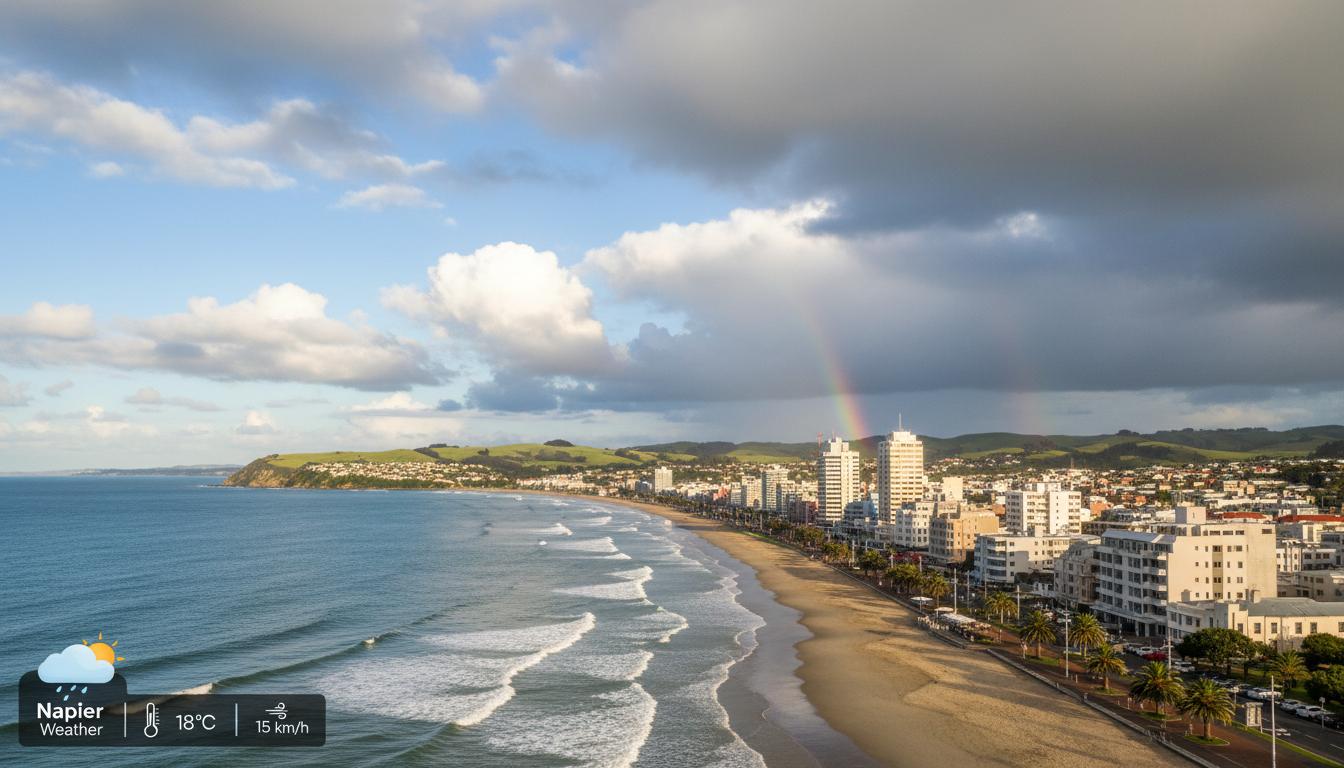
Napier sits on Hawke’s Bay’s curve of coast, where long sunny days meet the shelter of inland ranges. That mix gives the city a warm, dry-leaning climate by New Zealand standards and a reputation for blue-sky afternoons. Yet napier weather can flip quickly when a southerly slides up the coast or a westerly spills over the ranges. This guide explains what drives the city’s conditions, how the seasons feel, and how to plan smartly around the wind, rain, and UV.
What is
Napier weather describes the day-to-day conditions and seasonal patterns you’ll experience on the eastern coast of the North Island. It’s maritime and mild, often compared to a Mediterranean style because summers are warm and drier while winters are relatively gentle. The Ruahine and Kaweka Ranges block much of the rain from the west, so Napier is typically sunnier and drier than the national average.
In practice, that means:
- Plenty of sunshine through spring, summer, and autumn.
- Sea breezes moderating peak heat near the coast.
- Variable winds in spring and early summer, with gusty westerlies at times.
- Cooler snaps from the south in winter, but snow is a hill-country story, not a city one.
- Occasional heavy rain from passing lows or ex-tropical systems, especially late summer to autumn.
How it works
Several local and regional forces shape napier weather:
Topography and the rain shadow
Napier sits east of the Ruahine and Kaweka Ranges. When moist westerlies climb those mountains, they drop much of their rain on the western side. Drier air then descends toward the coast, warming as it sinks. The result: frequent clear, warm afternoons and lower annual rainfall than many parts of Aotearoa.
Sea breezes and coastal moderation
On hot summer days, the land heats quicker than the ocean, drawing in a sea breeze off Hawke’s Bay. That onshore flow trims peak temperatures near the shoreline but can push humidity up a notch. Inland, away from the direct sea influence, days can run hotter and nights cooler.
Southerly changes
Cold fronts riding up the east coast switch winds southerly, dropping temperatures sharply, bumping up cloud, and bringing showers. In winter, a southerly can turn a t-shirt afternoon into a jersey evening in hours.
Large-scale climate patterns
- El Niño: Tends to strengthen westerlies, favouring drier, sunnier spells in Hawke’s Bay but also gustier winds and higher fire danger in summer.
- La Niña: Can bring more onshore flows and humidity, with heavier rain risks from subtropical systems.
- Marine heatwaves: Warmer coastal waters can lift sea temperatures and add humidity, fuelling muggy nights and heavier downpours when fronts arrive.
Types / examples
Napier serves up distinct weather “modes.” Recognising them helps you plan your day:
- Bluebird sea-breeze day: Clear morning, light winds, then a gentle onshore breeze by midday. Warm, dry, and perfect for the Marine Parade.
- Foehn-warmed northerly or westerly: Downslope winds off the ranges bring hot, very dry air; inland suburbs and vineyards can spike over 30°C.
- Spring westerlies: Cloud scudding across the ranges, brisk gusts, quick sun–shower–sun cycles.
- Southerly change: Temperature drop, choppy seas, low cloud, and showers sweeping northward.
- Autumn high: Calm, golden days, cool mornings, and crisp visibility across the bay.
- Ex-tropical system: Tropical moisture meets local topography; heavy rain, coastal gales, and a rough surf day. Less common, but impactful when they arrive.
- Winter inversion: Still, clear nights can deliver inland frosts; fog patches at dawn, then bright sun by late morning.
Pros and cons
Thinking of moving, visiting, or planning events around napier weather? Here’s the honest balance:
- Pros:
- High sunshine hours and dry summers make for excellent outdoor living and vineyards.
- Mild winters compared with many parts of the country.
- Coastal moderation calms temperature extremes near the shore.
- Cons:
- Water restrictions and drought risk in hot, dry summers inland.
- Strong UV levels; sunburn is a real risk year-round, especially September to April.
- Spring winds can be tiring, and dust can rise during very dry spells.
- Heavy rain and coastal gales during occasional ex-tropical systems.
How to use or choose
Whether you’re planning a beach day, scheduling a harvest, or booking a wedding, use napier weather smartly. Start with reliable data, then account for local quirks.
Step-by-step: Planning around Napier weather
- Check a trusted forecast: Start with MetService or NIWA for a 7–10 day view; note wind direction and any weather watches.
- Look at rain radar and satellite: Confirm timing for showers or fronts and spot gaps for outdoor windows.
- Add wind and swell info: For boating, fishing, or surf, check marine forecasts and swell models for Hawke’s Bay.
- Watch UV and temperature: Even on breezy days, UV can be extreme; plan shade, SPF 50+, hats, and reapplication.
- Consider microclimates: Expect hotter inland and lighter sea breezes near the shoreline; pick your spot accordingly.
- Adjust for season: In spring, allow wind contingencies; in summer, aim early or late for outdoor work; in autumn, take advantage of settled highs; in winter, plan layers for southerly changes.
- Prepare a fallback: For events, have windbreaks, shade, or indoor options ready.
When to visit
- Summer (Dec–Feb): Beach days, long evenings, and outdoor dining; pack sun protection and a light layer for the sea breeze.
- Autumn (Mar–May): Stable, warm afternoons and clear light; great for cycling trails and winery visits.
- Winter (Jun–Aug): Cooler but often bright; ideal for hiking and markets on calm days.
- Spring (Sep–Nov): Lively and windy at times; blossom, longer days, and fast-changing skies.
Seasonal snapshot comparison
| Season | Typical daytime highs | Rain pattern | Wind character | Sea temperature | What it feels like |
|---|---|---|---|---|---|
| Summer (Dec–Feb) | 22–28°C; hotter inland | Drier overall; brief showers with fronts | Afternoon sea breezes; occasional hot westerlies | Peaks around late summer, often near 20–21°C | Sunny, warm, high UV; classic Hawke’s Bay |
| Autumn (Mar–May) | 18–24°C | Mostly settled; fronts later in the season | Lighter winds; calm spells common | Gradual cooling | Clear, golden, reliable for outdoor plans |
| Winter (Jun–Aug) | 11–15°C | Showers with southerly changes; fine breaks | S–SW changes punctuating still days | Coolest, often 13–15°C | Mild by NZ standards; crisp mornings inland |
| Spring (Sep–Nov) | 15–20°C | On-and-off showers; fast changes | Brisk westerlies at times | Warming again | Energetic, windy, bright light and quick showers |
FAQ
Is Napier really sunnier and drier than most places?
Yes. Napier commonly posts more than 2,000 hours of sunshine a year and sees less annual rainfall than the New Zealand average thanks to the ranges to the west. That said, heavy rain can still occur during active weather systems.
Does Napier get snow?
Not in the city. Snow is rare at sea level. Nearby ranges can see snow in winter, while the coast experiences cold rain and a brisk southerly.
How hot does it get in summer?
Most summer days land between the low and high 20s Celsius. Inland and during foehn-style westerlies, temperatures can push into the 30s. Sea breezes keep the shore a touch cooler.
Is Napier windy?
Spring is the windiest stretch, with frequent westerlies. Summer afternoons often feature a moderate sea breeze. Calm, glassy days occur in autumn and during winter highs.
What about humidity?
Humidity varies. Onshore flows and warm seas lift humidity in late summer and early autumn. Westerly foehn winds feel dry. Winter can feel crisp and damp during southerly changes.
When is the best time for the beach?
Late December through March offers the warmest air and water. Pick mornings for lighter winds, or later afternoons after the sea breeze eases. Always consider UV; it’s strong even when it’s breezy.
How often does it rain?
Rain tends to arrive in short bursts with fronts or lows rather than long drizzly spells. Autumn and winter bring more frequent passing showers, while summer usually has longer dry runs.
Are ex-tropical cyclones a concern?
They’re not common, but they do happen. When remnants of tropical systems track near Hawke’s Bay, Napier can see heavy rain, coastal gales, and rough seas. Keep an eye on official watches and warnings during these events.
Does Napier get frosts or fog?
Light frosts occur inland and on still, clear winter nights. Fog can form in valleys and low-lying areas, usually lifting by late morning under sun.
Which suburbs are warmest or coolest?
Coastal spots feel cooler on hot afternoons thanks to the sea breeze. Suburbs farther inland and sheltered from the breeze often warm more by day and cool more at night. Hill aspects and elevation also nudge temperatures.
Any practical packing tips?
- Year-round: Broad-spectrum sunscreen, hat, and sunglasses.
- Summer: Light layers, quick-dry clothing, and water.
- Shoulder seasons: A windproof layer for westerlies and sea breezes.
- Winter: A warm midlayer and a rain shell for southerly changes.
Where can I get reliable updates?
Use MetService for local forecasts, rain radar, and warnings; NIWA for climate insights; and Hawke’s Bay Civil Defence channels for hazards during severe weather.
Putting it together: living well with Napier weather
Napier rewards those who read the sky and the wind. Check the forecast, plan around the breeze, and respect the UV. For most of the year you’ll find bright light, warm afternoons, and calm evenings. On the days when a front sweeps through or the westerly cranks up, a slight shift in timing or location—closer to the coast for the breeze, inland for extra warmth—keeps plans on track. That’s the local way to make the most of napier weather.