
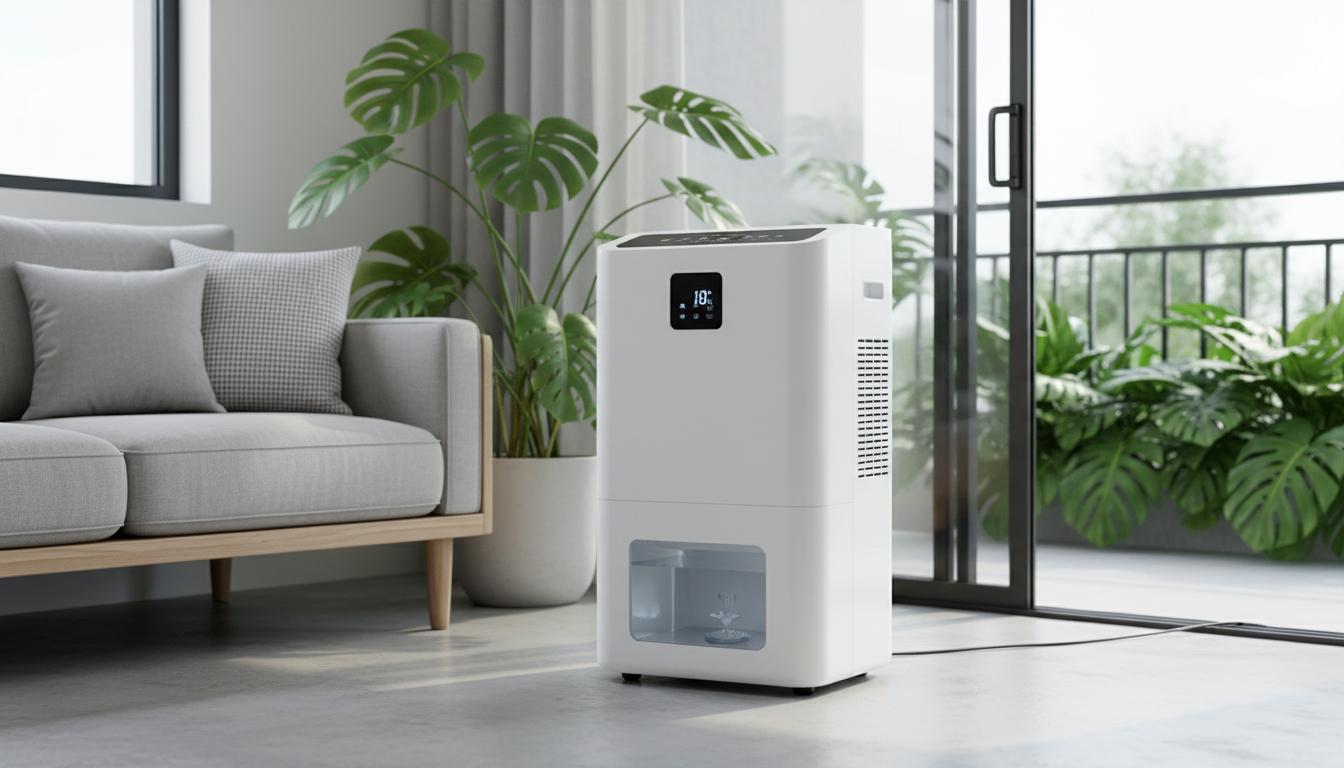
If your windows cry each winter morning and the wardrobe smells musty, you’re not imagining it—New Zealand homes often battle damp. A well-chosen dehumidifier can make your place feel drier, warmer, and healthier. This guide explains what a dehumidifier is, how it works, which type suits our climate, the real pros and cons, and how to choose and use one effectively in Aotearoa.
What is
A dehumidifier is a small appliance that pulls excess moisture from indoor air to reduce relative humidity. By keeping humidity in the ideal 40–60% range (often around 50–55% in a Kiwi winter), it helps prevent condensation on windows, slows mould growth, and makes rooms feel more comfortable. It won’t replace ventilation or fix underlying leaks, but it’s a powerful tool alongside good heating and extraction fans.
For New Zealanders—especially in older villas, coastal areas, or high-rainfall regions—using a dehumidifier can protect paint, furnishings, and health. Note: The Healthy Homes Standards still require proper ventilation and moisture control. A dehumidifier is helpful, not a substitute for extractor fans, drainage, or insulation.
How it works
Refrigerant (compressor) dehumidifiers
These work like a mini heat pump. A fan draws air over a cold coil; water vapour condenses on the coil and drips into a tank or out a drain hose. The air is then passed over a warm coil and returned slightly warmer and much drier. They’re efficient in warmer, humid conditions—great for North Island summers and heated rooms.
Desiccant dehumidifiers
Inside is a rotating wheel coated with a moisture-absorbing material (often silica). One airstream dries your room; another heated airstream regenerates the wheel and vents the collected moisture into the tank or drain. Desiccant units keep extracting well in cool rooms (below ~15°C) and add gentle warmth, which can help in unheated spaces in winter. They generally draw more power than compressor models.
Thermoelectric (Peltier) dehumidifiers
Small desktop units using a Peltier module. Quiet and low power, but low extraction. Fine for a cupboard, boat cabin, or tiny office, not for a damp lounge.
Humidity basics that matter
Relative humidity (RH) tells you how much moisture the air holds at a given temperature. Cold air holds less, which is why winter condensation is common in unheated rooms. Keep RH near 50% to discourage mould and dust mites. Warmer surfaces + lower RH = far less condensation on glass and walls.
Types / examples
| Type | Best for | Typical extraction | Power use | Pros | Cons |
|---|---|---|---|---|---|
| Refrigerant (compressor) | Heated rooms, warm climates (Auckland summer, Northland) | 10–35 L/day (rated) | ~200–450 W | Energy efficient in warm conditions, widely available, good value | Performance drops in cold rooms; needs defrost cycles |
| Desiccant | Cool rooms (South Island winters, unheated bedrooms) | 5–20 L/day (rated) | ~300–700 W | Works well in cold, adds gentle heat, steady extraction | Higher running cost; can over-dry small rooms if left on high |
| Thermoelectric (Peltier) | Small spaces, caravans, wardrobes | 0.2–1 L/day | ~20–70 W | Quiet, compact, cheap to run | Not suitable for damp rooms; very low capacity |
| Whole-home ducted | Larger homes, integrated HVAC/ventilation | 30–100+ L/day | Varies by system | Even control, discreet, can pair with ventilation | Higher upfront cost, professional installation |
Capacity ratings explained
Manufacturers quote “L/day” at specific test conditions. Common standards rate at 20°C/60% RH (European) or 30°C/80% RH (tropical). Extraction looks higher at warmer, wetter conditions. For New Zealand homes, compare ratings at 20°C/60% RH where possible—it’s closer to reality in heated rooms.
Features that genuinely help
- Humidistat: Set a target (e.g., 50–55%) so it cycles on/off automatically.
- Laundry mode: Continuous high fan to dry washing indoors faster.
- Auto defrost: Essential for compressor models in cooler rooms.
- Continuous drain: Hose to a sink or drain so you’re not emptying tanks daily.
- Filter: Washable dust filter; optional HEPA/carbon makes sense if you value air cleaning or odour reduction.
- Timer and Wi‑Fi: Handy for off-peak use and remote control.
- Caster wheels and carry handle: Easier to move between rooms.
- Corrosion-resistant coils: Useful in coastal areas with salty air.
Pros and cons
Pros
- Reduces condensation on windows and walls.
- Slows mould and mildew growth; helps with musty smells.
- Makes rooms feel warmer and more comfortable at the same thermostat setting.
- Speeds up drying of clothes indoors without blasting a heater.
- Protects books, instruments, electronics, and timber from moisture damage.
- Useful after leaks or painting to speed drying.
Cons
- Electricity cost—especially if run 24/7 or with a desiccant unit on high.
- Noise and airflow might bother light sleepers.
- Needs maintenance: filter cleaning, tank emptying or drain setup.
- Not a cure for leaks or poor ventilation; can mask bigger problems.
- Performance varies with room temperature; compressor units slow down in cold spaces.
How to use or choose
How to choose the right dehumidifier
- Measure the space: Note room size, ceiling height, and how closed-off it is.
- Assess temperature: Is the room typically below 15°C in winter? Choose desiccant; otherwise compressor suits most heated spaces.
- Gauge the damp: Persistent condensation, laundry drying, or obvious mould needs more capacity.
- Match capacity: Small bedrooms ~8–12 L/day; medium rooms/lounges ~16–20 L/day; very damp or multi-room use ~25–35 L/day.
- Check noise: Look for low fan dB if it will run overnight in a bedroom.
- Plan drainage: If heavy use, pick a model with a drain hose; position near a sink, floor drain, or install a condensate pump.
- Think running costs: Compare wattage and humidity control. A precise humidistat saves money.
- Consider NZ support: Warranty length, local service, and spare parts matter.
Cost-to-run quick check: A 300 W dehumidifier used for 8 hours consumes 2.4 kWh. At a typical New Zealand residential rate of about 25–40 cents per kWh (including GST, depending on provider and region), that’s roughly $0.60–$0.96 per day. Your bill will vary—check your tariff.
How to use a dehumidifier effectively
- Close windows and doors in the target room. You’re drying that air, not the whole suburb.
- Place it centrally with 20–30 cm clearance around the intake and outlet; avoid pushing air straight at a cold window.
- Set the humidistat to 50–55% in winter; 50% or lower in summer if you’re battling stickiness.
- Run it after showers, cooking, and laundry—peak moisture times. Use laundry mode for indoor drying.
- Use timers or smart control to run when power is cheaper or when you’re out.
- Empty the tank before it’s full, or connect a drain hose for continuous use.
- Clean the dust filter monthly and vacuum the intake grille; rinse and dry before refitting.
- Combine with ventilation: Always run bathroom and kitchen extractors. Air out the house daily when weather allows.
- Heat reasonably: Warmer surfaces reduce condensation. Even a slight temperature lift helps.
- Tackle sources: Dry wet towels outside, use pot lids, fix leaks, and improve drainage.
Safety and care
- Keep upright; if tipped, wait several hours before switching on (compressor models).
- Avoid daisy-chained power boards and damaged cords.
- Don’t block the air inlet or outlet. Keep dust and pet hair in check.
- In cold garages, ensure auto-defrost is working; ice on coils means poor performance.
- Wipe the tank with mild detergent occasionally to prevent biofilm.
- If using continuous drain, secure the hose with a steady downward slope to a suitable drain.
FAQ
What humidity should I set?
Target about 50–55% RH in winter and around 50% in summer. Below 40% can feel too dry and is usually unnecessary in New Zealand homes.
Will a dehumidifier heat my room?
It releases a small amount of warmth from its motor and process, so rooms feel slightly warmer and less clammy. It is not a substitute for proper heating.
Compressor or desiccant for New Zealand?
For heated rooms or warmer regions, a compressor dehumidifier is efficient. For cold, unheated spaces (e.g., a Dunedin spare room in July), a desiccant unit maintains extraction better and adds gentle heat.
Where should I place it?
Start in the dampest room, usually a bedroom, lounge, or laundry area. Ensure clear airflow. If you want whole-home impact, run it in a central heated area with doors open, or move it room to room.
How long should it run?
Use the humidistat and let it cycle. After a few days of steady use, run times usually drop as the building and contents dry out. Laundry mode is for temporary bursts.
Does it remove mould?
It prevents new growth by keeping humidity down. Existing mould needs cleaning with appropriate products and fixing the moisture source.
Is a dehumidifier better than a ventilation system?
They do different jobs. Ventilation removes moist air and brings in fresh air; a dehumidifier dries the air already inside. Many homes benefit from both—use extract fans religiously and a dehumidifier to control indoor RH, especially when outdoor air is cold and wet.
What about running costs?
Expect roughly the cost of a small appliance. For example, 250–400 W when operating for a compressor model, more for desiccant. Use the humidistat, timers, and close the room to minimise costs. Check your electricity rate; many households pay about 25–40 c/kWh.
Can I dry washing indoors with a dehumidifier?
Yes. Place the unit near a clothes rack, use laundry mode, and keep doors and windows closed. You’ll reduce moisture release into the rest of the house and speed up drying.
Is continuous drain safe?
Yes, if the hose is firmly attached and runs downhill to a drain or sink. Regularly check for kinks and leaks. In rentals, ensure any hose routing is tidy and reversible.
What size do I need for a standard Kiwi bedroom?
A 8–12 L/day unit usually works for a typical bedroom. For a larger living room or an older, damp space, consider 16–20 L/day or more.
Quick tips specific to New Zealand
- Winter mornings with heavy condensation? Run the dehumidifier early, then open windows briefly once the sun’s up to refresh air.
- Coastal homes: Look for corrosion protection and clean filters more often.
- Rentals: A dehumidifier helps meet comfort expectations, but Healthy Homes still requires effective kitchen and bathroom extraction.
- Baches, boats, and caravans: A small desiccant or Peltier unit on a timer can maintain dryness when you’re away.
Final take
Used well, a dehumidifier is one of the simplest ways to make a New Zealand home healthier and more comfortable. Choose the right type for your room temperature, size it to the space, run it with a sensible humidity target, and keep the filters clean. Pair it with good ventilation and steady heating, and you’ll see the end of fogged windows and musty corners—without wasting power.