
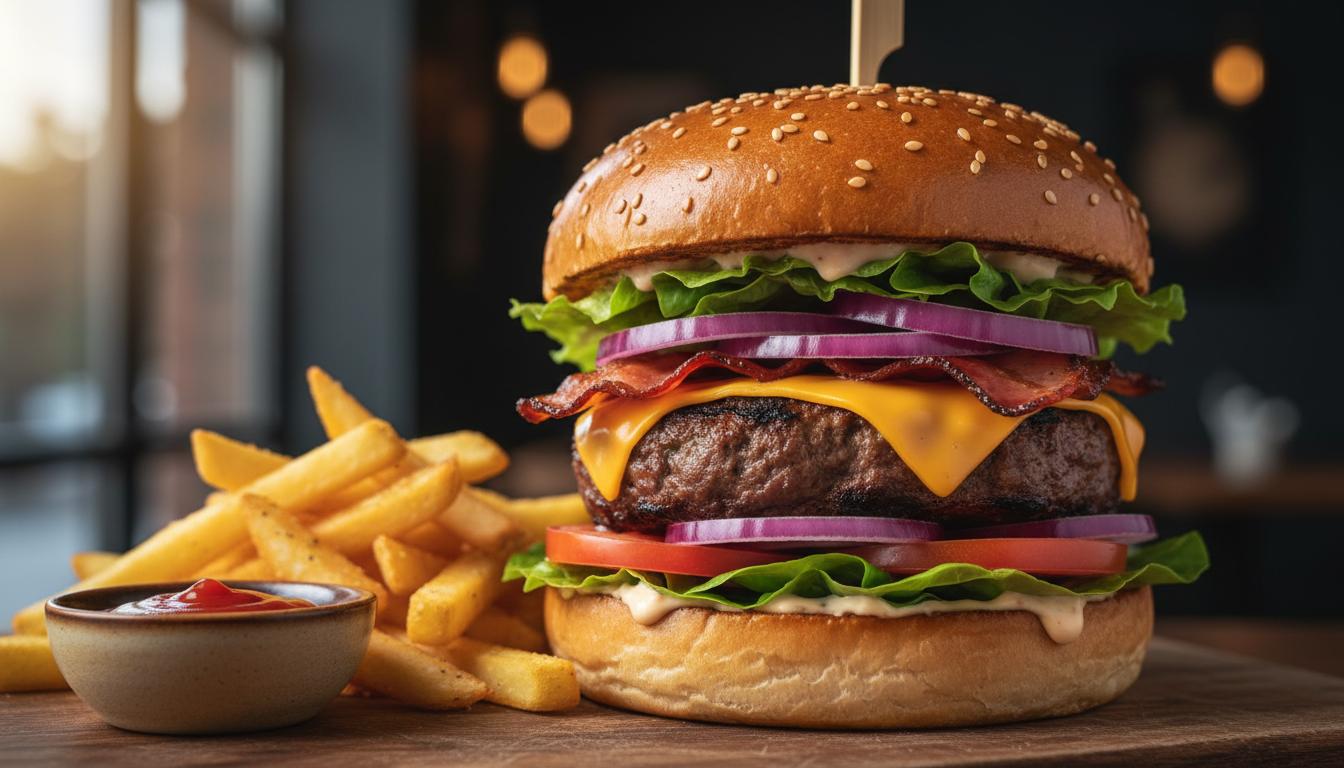
Burgers in Aotearoa are changing. Kiwis still love a juicy patty and a soft bun, but we also want better ingredients, lighter footprints, and less waste. That’s where the re burger idea comes in: re-think the burger, re-source the ingredients, re-cook with care, and re-use or reduce what we can. This guide breaks down what re burger means, how it works at home and when eating out, types and examples to try, the pros and cons, and how to choose well in New Zealand.
What is
At its simplest, re burger is a refreshed approach to burgers. It keeps what we love—great flavour, good value, easy to share—while improving how the burger is made and served. In New Zealand, you’ll see re burger used in two ways:
- As a concept: a “reimagined burger” built with better sourcing, smarter cooking, and lower waste.
- As a name: some eateries use the term or similar wording on menus or branding. Meanings differ by place, so always check the details locally.
In this guide, re burger means a practical framework any Kiwi cook or diner can apply. It focuses on four ideas:
- Re-think: choose what actually tastes best to you; skip the filler.
- Re-source: prefer local, seasonal, and responsibly produced ingredients.
- Re-cook: use methods that lock in flavour with minimal fuss and energy.
- Re-use/reduce: compostable or reusable packaging, and mindful portions.
How it works
Re burger isn’t a strict recipe. It’s a set of choices that add up.
Ingredients that suit New Zealand
- Protein: grass-fed beef or lamb from NZ producers; venison from farmed deer; hoki or tarakihi for fish burgers; plant-based patties (pea, soy, or mixed veg like kūmara and black bean).
- Buns: soft milk buns, potato buns, wholemeal, or gluten-free. Look for local bakeries or fresh supermarket options.
- Cheese and sauces: Mainland-style cheddar, Colby, or a slice of Swiss; aioli, beetroot relish, or a tangy tomato chutney with less sugar and more spice.
- Fresh add-ons: crisp lettuce, tomato, onion, pickles, avocado. For a real Kiwi twist, add sliced beetroot or a fried egg.
Cooking principles
- High heat, short time for beef and lamb smash patties to maximise crust.
- Gentle heat for thicker patties: sear then finish in the oven to keep them juicy.
- Fish fillets pan-fried or crumbed and shallow-fried to golden.
- Plant-based patties cooked until browned and hot through without drying out.
Step-by-step: build a re burger at home
- Choose your patty: 100–120 g for smash-style; 150 g for thick patties. If using minced meat, keep it cold before cooking.
- Season simply: salt and pepper just before cooking. Add herbs or spices if you like (smoked paprika, garlic, horopito if available).
- Heat your pan or barbecue until very hot. Cast iron works best.
- Toast your buns cut-side down in a dry pan or with a smear of butter until lightly golden; set aside.
- Cook the patty:
- Smash patty (beef/lamb): press thin, cook 1–2 minutes per side until crust forms; add cheese to melt.
- Thick patty: sear 2–3 minutes per side, then finish in a 180°C oven until done.
- Fish: season, cook 2–3 minutes per side until flaky.
- Plant-based: follow packet guidance; aim for a browned exterior and hot centre.
- Check doneness: for minced meat, cook to well done; an internal temperature of at least 75°C is recommended for food safety.
- Layer smart: sauce base on the bottom bun to catch juices, then patty, cheese, crunchy veg, and top bun.
- Balance texture: add something crisp (lettuce, slaw) and something tangy (pickle, relish) to cut richness.
- Keep it tidy: wrap in paper for easy eating and less mess.
- Serve hot with a simple side—think slaw or a handful of oven chips.
Types / examples
Classic Kiwi beef re burger
Grass-fed beef patty, cheddar, beetroot slice, fried egg, lettuce, tomato, onion, and tomato chutney on a soft bun. Big flavour, familiar, and very “summer BBQ at the bach.”
Lamb and mint yoghurt re burger
Lamb patty seasoned with garlic and cumin, topped with mint yoghurt, red onion, baby spinach, and crumbled feta. Rich but fresh, great on a toasted pita-style bun.
Hoki fillet re burger
Lightly crumbed hoki with crunchy slaw, dill pickle, and tartare. Crisp outside, tender inside, and not heavy. Ideal for those who like clean flavours.
Venison and blackberry relish re burger
Lean venison patty with a quick berry relish, Swiss cheese, and rocket. The savoury-sweet contrast works well; don’t overcook or it will dry out.
Plant-based kūmara and black bean re burger
Kūmara, black bean, and corn patty with avocado, lettuce, and a smoky chipotle mayo. Plenty of protein and fibre, with a gentle sweetness from the kūmara.
Gluten-free re burger
Any of the above on a sturdy gluten-free bun or wrapped in crisp lettuce leaves. Make sure sauces and patties are certified gluten-free.
Pros and cons
Pros
- Better taste: fresher produce and proper cooking bring out flavour without piling on sauces.
- Local pride: NZ-grown meat, fish, cheese, and veg support regional producers.
- Flexibility: suits omnivores, vegetarians, vegans, and gluten-free eaters.
- Lower waste: smart portions and compostable packaging reduce rubbish.
- Nutrition you can shape: pick leaner proteins, add more veg, choose wholegrain buns.
Cons
- Price can be higher for premium or ethically sourced ingredients.
- Time and skill: getting a perfect crust or a flaky fish fillet takes practice.
- Availability: seasonal produce or certain buns may sell out, especially outside big centres.
- Trade-offs: the most sustainable option isn’t always the favourite in flavour, and vice versa.
How to use or choose
At the supermarket or farmers’ market
- Look for grass-fed beef and lamb, lean venison, or reputable plant-based patties with short ingredient lists.
- Pick buns that are soft but hold shape. Wholegrain boosts fibre; gluten-free for coeliacs.
- Choose crisp lettuce, in-season tomatoes, and a punchy pickle or relish to balance richness.
- Check labels: country of origin, allergen info, and any sustainability certifications relevant to the product.
When you eat out in New Zealand
- Scan menus for sourcing notes (e.g., NZ beef, free-range eggs) and house-made sauces.
- Ask how patties are cooked. Smash-style for crispy edges, or thicker for a more “steak-like” bite.
- Packaging matters: compostable or reusable is a good sign of re burger thinking.
- Portion sense: a smaller burger with a bright side salad often beats a huge burger you won’t finish.
Comparison: popular patty choices for a re burger
| Patty type | Typical flavour/texture | Protein (per 100 g, approx.) | Fat (per 100 g, approx.) | Environmental notes (general) | Approx. cost in NZ |
|---|---|---|---|---|---|
| Beef (grass-fed) | Rich, savoury; great crust for smash patties | 20–26 g (varies by cut/lean %) | 5–20 g (lean to regular) | Higher footprint per kg; farm practices matter | $$ |
| Lamb | Distinct, slightly sweet, very juicy | 19–25 g | 8–25 g (varies widely) | Higher footprint per kg; choose local and well-farmed | $$$ |
| Venison | Lean, clean, slightly gamey | 20–24 g | 2–8 g (lean) | Lower fat; impacts vary by farm and transport | $$$ |
| Hoki (fish) | Light, flaky; mild flavour | 15–20 g | 1–5 g | Lower to moderate; method of catch matters | $$ |
| Plant-based (pea/soy) | Varies; can mimic beef or taste veggie-forward | 14–20 g (by brand) | 5–15 g (by brand) | Generally lower footprint than red meat | $$ |
| Kūmara & black bean | Soft, slightly sweet, high fibre | 7–12 g | 2–8 g | Low; mostly plant ingredients | $–$$ |
Notes: nutrition varies by cut, recipe, and brand. Use the table as a quick guide when planning your re burger.
FAQ
What does “re burger” actually mean?
It’s a shorthand for a reimagined burger: better ingredients, smarter cooking, and less waste. Some eateries may also use “re burger” as a name. Meanings vary, so check locally if you’re after a specific place.
Is re burger a specific brand?
Not necessarily. In this guide, re burger is a concept you can use at home or when ordering. If you’re searching for a particular venue, look up its location and menu directly.
What’s the safest way to cook a burger patty?
For minced meat patties, cook to well done. A food-safe internal temperature is at least 75°C. Thick patties benefit from a sear then an oven finish to keep them juicy and safe.
How do I make a healthier re burger without losing flavour?
- Pick a leaner patty (venison, lean beef, or a plant-based option).
- Use a wholegrain bun or a smaller bun size.
- Load up crisp veg and add acidity (pickle, relish, mustard) to cut richness.
- Go easy on creamy sauces; a thin layer goes a long way.
What bun should I use for a smash-style re burger?
A soft milk or potato bun that compresses slightly but doesn’t disintegrate. Toast it lightly so sauces don’t soak through.
Can I make a gluten-free or dairy-free re burger?
Yes. Choose a certified gluten-free bun or wrap in lettuce leaves. For dairy-free, skip cheese or use dairy-free slices, and check sauces.
What’s the best cheese for melt and flavour?
Cheddar for punch, Colby for mild creaminess, Swiss for nutty notes, or a good slice of processed burger cheese for maximum melt. Add it while the patty is still hot.
How can I reduce waste when ordering a re burger?
- Eat in and skip single-use packaging when possible.
- Choose venues using compostable or reusable packaging.
- Right-size your order so you finish it.
- Bring your own container for leftovers if the venue allows it.
What NZ flavours pair well in a re burger?
Beetroot slices, fried egg, smoky bacon, sharp cheddar, watercress, and tangy chutneys. A touch of mānuka honey in mustard or a sprinkle of native herbs (where available) can add a local twist.
Quick recap
Re burger is a way to eat better burgers in New Zealand—focused on flavour, local sourcing, and less waste. Choose good ingredients, cook with intent, and keep the build balanced. Whether you’re flipping patties at home or ordering in town, small choices make a big difference to taste, cost, and impact.